
A swashbuckling sailor who turned priest and tried to free the slaves on Borneo
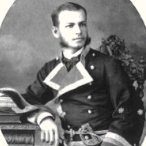
Don Carlos Cuarteron
Coming from a prosperous family, Don Carlos Cuarteron went to sea at the age of 13 in 1829 boarding a ship for the Philippines, Spain’s most prosperous colony at the time. While on the long journey from Spain he excelled in navigation skills and seamanship when he joined the merchant navy as a cadet. He was given command of a ship at 18.
While living in Manila, Cuarteron shipped cargo across the South China Sea. He would deliver silk tea, various items from Europe, cotton and food stuff and anything else that would deliver a profit for Spain. After seven years of dodging dangerous reefs, pirates, complex customs and rowdy crews, he was promoted to a full captain of the navy of the Philippines before he was 25 years old. His journeys became more difficult and as time progressed.
While restocking in Manila in 1844 he heard tell of a large cargo ship, the Christina, that had run aground with a large amount of silver bullion. He purchased a ship called the “The Martyrs of Tonkin” hired a crew and went to salvage the silver. The details of are sketchy, but he managed to retrieve the silver handing it over to the insurance agents in Macao. After waiting the required time for the owners to appear, the entire amount of silver was handed over to him.
Another account states:
As captain of the brig L’Imperatrice, he discovered the wreck of the of the Nuestra Señora de la Consolación, a Manila galleon that had sunk decades earlier near the Philippines. The ship had large amounts of silver bound for Acapulco. He negotiated for the salvage rights and was given the proceeds.
Historians tend to lean towards the Christina account while Nuestra Senora is the more romanticized version.
Now wealthy beyond his imagination, Cuarteron sailed around Southeast Asia and decided to devote himself to the freedom of Catholics enslaved by Muslim rulers. He saw in the south Phillipines where Catholics were sold into slavery or sent to Borneo for human sacrifice. He also observed a great need for the establishment of Catholic missions on Borneo.
His move to the priesthood came in likely stages: Cuarteron had strong moral unease on what he witnessed, an increasing involvement with the catholic clergy in the Phillipines and a sense of a personal calling. He decided to leave the commercial life. Once he made this personal decision, he pursued it with great intensity, he was not intent to wait for the Church to act and was very independent person.
While in Rome, he did not join any religious order. Rather he, was ordained under the authority of a bishop, more than likely a bishop in Marilia. He was not constrained to the rules of a missionary order and, as such could act very independently. He clashed directly with church authorities and acted more like one man mission society.
The Mission at Labuan
Labuan in the mid 1800’s was a British colony, was in a strategic location off the coast of Borneo and was a regional hub to Brunei and coastal trade routes. For Cuarteron it offered the safety of British rule, access to slave markets and a base to reach coastal markets. He became convinced that he would establish his mission on Labuan.
Rome created a new mission, Prefecture Apostolic of Labuan and Borneo. Cuarteron was appointed as its first leader and he arrived in the region around 1857. Mission stations were established on coastal Borneo and in the Brunei territories. There was some initial cooperation between colonial officials and local intermediaries. Cuarteron used his maritime knowledge to navigate between Borneo coastal islands.
The mission was a rough frontier place. It had a simple church often in need to repair, living quarters for Cuaertron and residents and a school room. It also offered basic farming and food production. It functioned as a refuge for freed slaves, a training enter and a religious outpost.
The community was unusuayl and fluid. There were many freed slaves, mostly children, local converts, occasional helpers and Cuarteron himself. It was less like a parish and more like a self contained survival community.
He entered local slave markets in places like Brunei and paid for enslaved people and brought them back to his mission in Labuan. Critic argued buying slaves keeps the system alive while supporters stated it was the only way to save lives.”If I refuse to buy them, they remain slaves . If I buy them they become free” he stated.
Anti Slavery Hub
Cuarteron travelled to nearby regions especially to Brunei, purchased slaves, brought them back to Labuan and educated them. The mission became a safe haven however he ran out of money and it became financial drain.
The Core Corridor was the Sulu Sea Slave route from the South Philippines to Sulu to North Borneo to rescue slaves and back to Labuan. The second route was the Labuan Borneo rescue loop which saw the interception or recovery of captives from coastal settlements and transport back to Labuan. The third route was the Labuan Brunei river and North Borneo coastal villages. Here, they tried political negotiation with the Brunei authorities ,ransom agreements or attempted suppression of slave trafficking routes.
There were three main ways to release slaves. The first was to pay money to the captors to free to the slaves. The second way was to negotiate with coastal groups while the third was the occasional recovery of captives while travelling between islands. In one mission document his jurisdiction explicitly included “redeemed slaves” as a mission population category.
The Mission saw many children rescued and given new lives but also many deaths especially from illness. This dual reality shaped Cuarteron deeply. Every success came with visible suffering and his writings reflect both hope and grief.
In his later life, Cuarteron’s health declined and the mission struggled to sustain itself. After his death, the mission changed hands and later Catholic missionaries built on what he had started.
The mission became one of the earliest catholic footholds in North Borneo and a rare example of a mission focused on anti slavery.
Cuarteron became famous for using his wealth to purchase enslaved people in order to free them. Many children were freed from slavery through Cuarteron’s efforts which may reflect his lack of funding.
Sources:
Gibby, Mike Crowned with Stars: The Life and Times of Don Carlos Cuarteron Kota Kinabalu:Natural History Publications, 2005
Summers, Francis P. The Extraordinary Life of Don Carlos Cuarteron Manila: Catholic Mission Press,1960’s-1970
Some of the above information was obtained through AI
Tom McLaughlin for BorneoHistory.net