
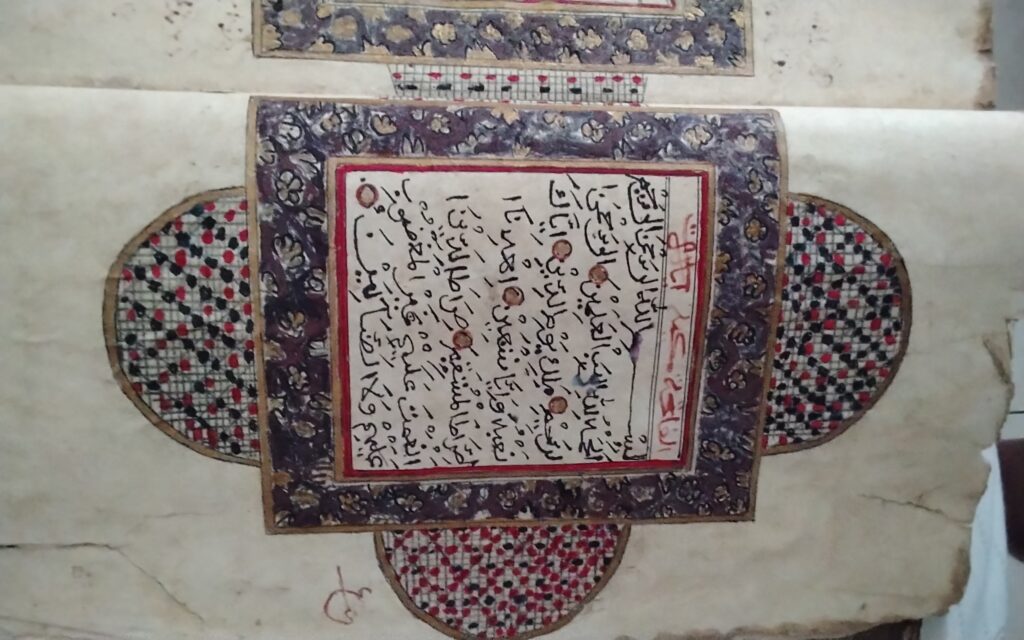
A Sarawak Book
While living here, I noticed a lack of books about the history of the Sarawak area pre-1840. I searched all the local libraries and museums, and none were to be found. I began my search by visiting kampong houses searching for people who may have copies of books written in Malay, Arabic or Jawi. I could find somebody to translate them.
What is Jawi? Take the Arabic alphabet and make it so it reads Malay. This was the early written language of Southeast Asia.
In my travels through the kampongs across the river from Kuching,I did not recover any books. The elderly residents, all of them, told me people from Brunei came through during the 1970’s or 1980’s and purchased most of them. The people recognized that they were from Brunei because of their accents. This Brunei theme ran through the entire kampongs along the river. At the time, people were very poor and would have sold their volumes for a pittance.
The next question was why would people from Brunei come to Sarawak and want to purchase books. According to historians and academians, Brunei was attempting to establish itself as the oldest Islamic monarchy in the world. They were probably looking for ancient information which would support this prestigious claim or to suppress any literature that would deny them the honour.
My wife and I flew to Brunei three different times in search of any manuscripts from the Sarawak area which may have been brought back to Brunei. We went to three different museums and met the young librarians who had just graduated from London. We also met men who were charge of these ancient manuscripts and we were told them we could speak Malay and read Jawi but they disappeared behind closed doors. There are very few people who read Jawi and are able to translate it to English.
The scholars at the University of Brunei were also quizzed as to where these scripts might be. They claimed they did not know. They said the Sultan may have a private library and they could be housed there. They probably could not translate them even if they did find them.
A few years passed.
One day, was walking down the Main Bazaar (Main Street) along the river in Kuching and came across a gentleman who had a table set up on the sidewalk next to what was then a bank. He sold various items pertaining to the Malay world. On the street in front of him was a dilapidated car. I asked if he had any books about the history of the area. He said he did. I became very excited.
The gentleman said he was a bomoh or dukan from the kampongs. I didn’t know what a dukan or bomoh was. I later found out he was a mediator between the spirit world and the human world. He informed he had book which he said several people or spirits wanted. He said he had three wives. A few days later, he brought the book to the table on the sidewalk. He said the price of the book had the number 7 in it. By this time my wife from the kampong joined me. When he found out she was from royal nigrat lineage, he agreed to the sale. Not thinking and overly excited I quoted RM7,000. The book was mine.
I went to several people at the Sarawak Museum and the Islamic Museum. None seem to know anything about it but, sadly, none were very interested. However, the British Museum was very interested but would not obtain the book unless I had clearance from the Sarawak Government.
The translation took ten or so years. My wife translated it from Jawi to Malay and then from Malay to English. Several of the old words were in Sarawak Malay or old Malay. She had to ask many much older people in the kampongs the meanings of some of the words. I don’t know where the handwritten translations from Jawi to Malay are. I will try to find them.
My plans were to donate it to the Sarawak Library but first I the book translated from Jawi to Malay or English in order to find any written history of the Sarawak world. My wife volunteered to perform the translations but after on an off efforts of ten years she suddenly stopped and refused to translate any more.
A few years ago, I wanted to donate the book to the Sarawak Library. However, I was prevented from doing so as a kampong woman who insisted I obtain vast amounts of money for it. I come from a culture where such things are usually donated rather than sold to institutions. However, I would like something for it. Recognition would be nice.
The Book
The book is written in Jawi. The scene takes place on Bali, Java and Borneo Island. Where on Borneo Island I am not sure. The year it was written is the early 1800’s. The story reflect the texts of the Ramayana, the Mahabhbarata and Panji Tales. Where it fits within those categories, I just don’t know. One will have to compare the names, places and gods of those eras with other texts of the same venture.
How it got to downtown Kuching was communicated to me by the dukun. It was carried from south Borneo to the kampongs of Kalimatan and Sarawak by his grandfather and his great grandfather through the spirits of the unseen world.
Now we must talk about the unseen world. This is a world within the Malay kampong that is inhabited by genies, spooks and other beings that cannot be seen by people. It can only be contacted through people called bomohs or dukuns. The bomohs can cause people to fall in and out of love, place a curse on a person cure a person of a disease and many other things. One very recent belief was that two people believed that if they cleared land and made three houses habitable the bomoh would come from Pontianak and fill the house with money. This was firmly believed by my wife and her Auntie. They even offered me RM10,000. Of courses nothing came of it but they firmly believe in the existence of this world.
The unseen world among some of the Malays of the kampong is a secretive one where very few talk about. People are afraid of those who interact with it because of supernatural powers they may acquire. They feel they can cause one to have all sorts of maladies, misfortunes and other calamaties. Most do not believe in this world, but some, like my ex wife and her auntie believe fervently in it.
The Jinns of the Koran and the beings of the Malay world are not the same. In my mind (I have read the Koran, took me three months of intensive study) they are two separate entities however, in the minds of some of the people of the kampong world, they blend together.
One of the political ramifications of the unseen world was the use of the entity by Taib Muhammed, the Chief Minister of Sarawak for over thirty years. He used the unseen world to control the kampongs and to strike fear into the people. He often employed Bomohs who came to the palace and paid them thousands and thousands of ringgitt to work their supposed magic. People were employeeed by him to strike fear into the people. As a consequence, most of the rain forest of Sarawak was cut down and sold.
Key Differences
| Aspect | Qur’anic Jinn | Malay Kampong Spirits |
| Origin | Created from smokeless fire | Rooted in animist, Hindu-Buddhist, and Islamic syncretism |
| Role | Moral agents accountable to God | Guardians, tricksters, or ancestral spirits tied to nature |
| Interaction | Can convert to Islam, judged in afterlife | Engage through adat rituals, omens, and folklore |
| Perception | Recognized in Islamic theology | Localized village belief, oral tradition |
| Disposition | Both good and evil | Often neutral, benevolent, or vengeful depending on respect |
The Story in the Book
The book begins where five gods descend from heaven. Batara Kasuma and all four of the dieties changed their names because they did not want the others to know they were from heaven.
Batara Nyi Kasuma went down to Mount Indra Gali on the island of Java.He was told to go Majapahit where he will meet a the daughter of Sang Haji Jaya whom he will marry. He is given a ring named Mankia and as long as the ring exisits the whole of Java will not be defeated by its enemies.
Sang Haji had a beautiful daughter but he refused all the advances for marriage. The five travellers (gods in disguise).Sang Haji’s beautiful daughter is wed to Batara Kasuma.
Radin Indra Kasuma becomes the ruler of Majapahit. The King and Queen rule justly and have five more children. One day the royal couple wanted to visit the parents of the Queen at Royal Agra Asmara mountain. The journey is joyful and after much visiting, the royal people and their entourage went to sleep.The royal entourage was very sad to return home.
Meanwhile, the King of Bali had heard that Radin Indra had been appointed as King of Majapahhit. He was not happy. He commanded that his army prepare for war in three days time. The King of Bali marches to Majapahit and burns down villages along the way. A huge battle ensues beween the forces of Majapahit and Bali. Majapahit wins the battle between the them Bali and Balambangan.
There is much included here where the Kings of Bali and Balambangan are cremated and animals of the forest are divined. The book continues with the further adventures of the five fellow travellers. (gods)However, the translation suddenly stops where my wife left off and refused to continue.
Does the story related in the book have anything to do with the history of the Sarawak?
In one sense, the story combines with the tales of India and during the time of Majapahit. They then were written down or communicated orally and travelled to Borneo. The term batara went from a diety in India to a powerful supernatural being in Java to a title of respect in Sarawak.
Suralaya in sanscript means abode of the gods. In the Malay world it becomes heaven. Kasuma transfers from Indian sanscript of beauty to an honorific person in Malay. We also see here the of the word Haji, the Islamic term for having made the pilgrimigridge to Mecca, making inroads into the story.
Are there any titles of Borneo or Sarawak that are mentioned in the book?
There are two Malay titles that reflect Sarawak and they are Temmenong and Demak. Demak is, of course in Santubong and Temmenong is a title from one of the minor officials of Brunei who came to rule Sarawak. Ningrat is another Borneo term I learned from my kampong wife which means of royal blood. She says its from central Borneo. The term radin definitely comes from Borneo and is believed to have come from Brunei when the Santubong kingdom was established in 1599.
Are there any place names?
There are many places called Tanjung Biru however Tanjung usually means a cape and along with biru a cape that juts out into deep water. There are also many names which I just can’t find or that have disappeared from history.
How did the book get here?
The dukun, bomoh or witch doctor told me his grandfather carried it up from Sambas to the Malay kampongs. It is supposedly mystical and has certain properties. However, the unseen world among some Malays is a secret world not talked about, hidden and veiled in mysticism only accessed by the Bomoh or dukun. How the book became a part of this world ,indeed, the entire unseen world should be investigated as it is part of the culture.
Why would a book about the history of Java, Bali and other Indon areas end up in Kuching?
The only thing that makes any sense is that the book was somehow connected with mysticism and the unseen world and was brought here by those perceived forces.
Are there any other books?
I have checked the Sarawak Museum, the Sarawak library and other libraries and have found none. I have travelled to Brunei in search of any information relating to that country and Sarawak. This doesn’t mean there aren’t any. There are Islamic texts in Arabic and Jawi which talk about the religion but not histories or stories that I have found.
What can be done with the book?
The book can be studied by students of the language of Jawi. There are many words and phrases which we have not translated properly into English which reflect the culture of the times. The shifting of language from Old Malay, to Sarawak Malay and then to modern Malay can be compared.
Tracing the story from India to Borneo and how it has changed is another pathway of study. The scenes, characters and locations are of vital interest to the history of Malay literature. Now, since the book is translated, the tale can easily be compared to other narratives that are part of the Indo Malay world.
Of further interest would be how the book arrived on the Main Bazaar of Kuching. From its writing to its journey to me and now to the library. Those of you who know about the unseen world and the possible pathways the book may have taken through the kampongs would add a great treasure of knowledge to the Sarawak Malay world.
So, here is a book, purchased on the Main Bazaar in Kuching, which tells the tale of five gentlemen who come down to earth and have adventures. It is the only book that I have been able to find in Sarawak and I have donated it to the Sarawak Library. The library will digitize the contents and preserve the original.
For a free e-copy of the translation just contact me at Sarawaktom@gmail.com
Tom McLaughlin for BorneoHistory.net