
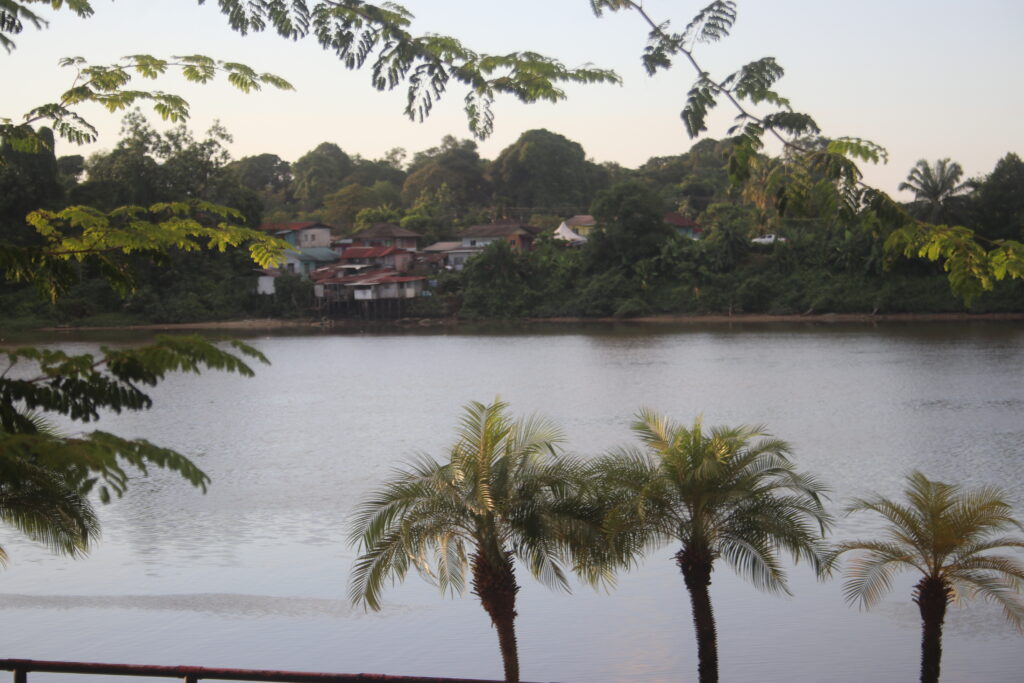
Immigration of people from Java to Kampong Boyan, Gersik and Sourabaya along the Sarawak River 1800-1840
When one looks at a map of Sarawak one notices the names of Boyan, Gersik and Sourabaya along the Sarawak River across from Kuching. These three kampongs hold the remnants of the people who possibly migrated there from those villages along the north coast of Java.
_________________________________________________________________________________
A paper recently published, July 6, 2026, informs Kampong Boyan did not have a name when under Brunei rule pre 1841. It informs its first name was Kampong Panglima Sadam, named after the Malay hero. As people moved in from Boyan Java, the name was changed to Kampong Boyan in 1884. The Boyanese migragated in masse during Brooke rule. The paper was written in Malay but I made an English translation using Google translate which I will send you.
JURNAL ANTARABANGSA PENGAJIAN KEPULAUAN MELAYU JIL. 6 BIL. 01 (2026)
_________________________________________________________________________________
Prior to the appointment of Sultan Tengah in 1599-1601,the kampongs were ruled by local Chiefs, according to local history, with influence from Sambas. Upon the death of Sultan Tengah in 1641, Brunei appointed four Datus to rule the area. These Datus acted as regional governors managing trade especially antimony. There are no records of these Datu’s names in either written or oral history. The Datus would revolt in 1830’s against Brunei rule.
These towns, Gersik and Boyan, were trading ports moving goods along the coast of Java and into the vast archipelago. They were also exchanging ideas and spreading the voice of Islam by way of what we call missionaries. They probably sailed to Pontianak and then to the ancient city of Sambas. The visited both rivers, the Kapuas and the Sambas and the settlements on them trading forest goods for cloth, metal and other goods.
However, things began to change.
The first disruption occurred in 1800 when the Dutch East India Company collapsed and the Dutch government took over the administration of the area. This caused the reorganization of how the traders and denizens of the of the villages were governed.
The next was the change of administration in 1811-1816 to British rule under Thomas Raffles. The Napoleonic Wars were raging in Europe and the British had seized several Dutch colonies. The Indonesian colonies were returned to the Dutch in 1816.
The eruption of Mount Tambora in 1815 was probably another factor. Strong tidal waves, ash rains and crop disruption was felt throughout Indonesian and most likely in those three villages which were located along the coast of Java.
The establishment of the port of Singapore 1819 was under British rule was a free port under British rule which replaced Bintan which was under Dutch rule. Bintan had many restrictions to trade whereas Singapore had none.
The Java War raged from 1825-1830 between the Dutch and Prince Diponegoro in central Java. Although not having a direct affect on the three villages, the war cost over 200,000 lives, disrupted trade and caused heavy taxation to be imposed by the Dutch.
Meanwhile, the Malays had flocked to what is now Kuching and established kampongs behind the national mosque. Antimony was mined in Bau using the Bidayuh as slaves and sailed down the Sarawak River to Kuching. From their headquarters in Kuching, then called Serak, the Brunei rulers sold the antimony to the Sarkies, a Singapore based company, who transported it to Singapore and then onward to England. Antimony was used as a ballast in ships, in munitions and as a medicine for horses and other animals. Arab ladies used it as an eyeliner.
A conflict broke out between the upriver Malays and the Brunei forces. An impasse developed which lasted for ten years. Then James Brooke sailed into the conflict. He settled the standoff and, as a reward, was given Kuching (Serwak). He assumed the antimony trade from Bau to Singapore.
In the 1830’s there were four Malay groups in Kuching: The earliest were the ones who escaped Santubong in 1512 and settled in the upland region. The second group was from Brunei royalty who came in the early 1820’s and who profited from the mining of antimony and the third were migrants from north Java. The fourth were migrants from Sambas.
The migrants could have followed the Sarkies, a Singaporean trading group, from Singapore to Kuching. The possibility of trade with the Bidayuh at Songkong is another. Trade north to Brunei and then following the royal family to Kuching is also a possibility. Whichever route they took, one or all of them, each group settled into the kampong named for the village whence they came. People from Boyan settled in Boyan, people from Gersik settled in Gersik and people from Sourabaya settled there. The kampongs were divided by a creek or footpath separating one from the other.
Their main source of products to sell was from Santubong which obtained their goods from Singapore or Sumatran ports. Singapore became a major trade area. However, they did not travel the Sarawak river from the source to the kampong but rather coursed through the small inlets and creeks that wound their way through the mangrove forests between Santubong and Kuching. As the tides rose, the creeks became passable and a small boat or skiff could navigate their way to the kampong. From this waterway, fish, food and trade goods such as cloth could make their way to the small kampongs. The goods could then be sold up and down the Sarawak river without having to travel the long distance to the sea. There was a large contingent of people from Brunei who were living there at the time. Much larger boats would later transit the Sarawak river from its mouth at Santubong to Kuching. (Serak)
The customers for the north Javanese were the Malays living up river and the large contingent of Brunei forces who were living along the river to collect the antimony for the Sarki Company and to fight the upriver Malays.
For about thirty years, from 1800, the people of north Java suffered several upheavals including the change in administration from Dutch East India to Dutch colonial rule, British rule, The Tambora Eruption and finally the Java war. All of these were probably were a cause for the migration to Sarawak.
Tom McLaughlin for BorneoHistory.net