
The Sebuyau
The Sebuyau originated in the Kapuas Basin of what is now Indonesian Borneo. Perhaps as early as the 16th century, Ibanic people who were to become the Sebuyau migrated up the Kapuas River. They crossed into the Lupar Basin in what is now Sarawak and moved north. However, the people who would become the Sebuyau moved west. They first settled on the Sebuyau River around 1700, approximately 100 km east of Kuching. The people became known by the name of that river. They later abandoned the area.
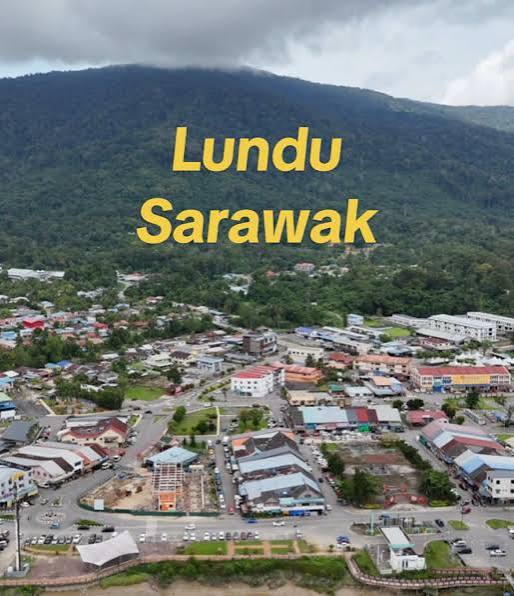
The Sebuyau arrived in the Lundu area around 1800. They became cut off from the other Iban groups and settled around Lundu and Kuching.
Some of the western migrants settled around the Samarahan River east of Kuching. Another larger contingent eventually, by the early 1800’s, made their home where the Stunggang Creek empties into the Kayan River. When Brooke visited the area in 1839, he noted: “The tribe now at Lundu were formerly settled on the Samarahan River for many years; and their burial-place there contained the ashes of the parents and grand-parents of the present chief who, with his followers, were not long ago driven to Lundu” (Keppel, 1846a, p. 259). The Sebuyau chose the Lundu area because it was a good place to grow wet rice, which could provide them with a high standard of living.
By moving to Lundu, the Sebuyau effectively became marooned in time (hundreds of years) and space (hundreds of kilometres west of Iban), in a sea of other languages. Because of their location and the many generations spent away from the main group, Sebuyau developed into a peripheral, isolated variety of Iban.p.19
In the 1830s, Brooke reported that the Sebuyau lived mainly along the Sadong and Lundu rivers. Hugh Low reported in 1848 that they had moved to where the Padungan Stream and the Sarawak River met and to the Samaarahan River and Lundu. p.22 There is no Sebayu village in Kuching anymore. They may have moved to Siol Kandis.
Brooke noted small Malay homes clustered around the great Sebuyau longhouse in Lundu, and they also visited a nearby Chinese settlement. Brooke established a fort and administrative offices at Stunggang around 1850, and the town of Lundu began to gather around a Chinese bazaar about a mile downriver. The Sebuyau were caught between these three very different ethnic groups: the Malays, the Chinese, and the Englishmen.
The Malays had been attacking Chinese ships since the fifth century. By 700, the Sri Vijaya empire derived much of its income by taxing the pirates. The 1600’s brought a marked increase in piracy along the Sarawak coast. “The Malay tribes live almost wholly by piracy… each town possesses several large prahus [boats], which they man, and send out to intercept any unfortunate junk or other vessel …too near their coast. When the vessels are captured, the cargoes are deposited in their warehouse, the vessels are broken up, and the crews are retained as enslaved people, to dig yams or pound paddy” (Marryat, 1848, p. 99)
The Chinese have been visiting Borneo for three thousand years. Archaeologists have unearthed artefacts at Santubong dating back to before the early 500’s. The main thrust of the Sambas’ Chinese began to push into the Lundu area around the early 1800s. By the 1860’s hundreds of acres of vegetable gardens had been established in the area. However, the Brooke Raj wanted crops they could tax and, by the late 1890’s, encouraged the Chinese to take over more Sebuyau lands. The Chinese entered business and became the dominant businesspeople in the area.
The Sebuyau seem to have a close relationship with the Brooke regime. One reason was that allying with the English gave them firepower and encouragement to attack their enemies, the Ibans. Certain actions, such as establishing a fort, a school for newly arrived officers, and exiling rebels to a piece of land outside Lundu, indicated a close relationship with the British. It is thought this area was secure the Sebayu would not rebel against the Brookes. British historian Keppel described the Sebuyau as “Mr Brooke’s favourite tribe of Dyaks, of superior character” James Brooke referred to them as “my pet tribe.”
The Ibans crossed over into Sarawak about 500 years ago. They may have moved inland to avoid the Malay pirates. They practised state-evading practices, preferring an agricultural existence as opposed to military service or becoming slave holders. p.68 They were not permitted to live within the towns established by the British.
Current differences between the Ibans and Sebuyau include a one-night mourning fest for the dead, where the Ibans host several nights. Rituals involving pig hearts and chicken intestines during the June celebration of Gawai are common among the Iban. The Iban are river people, with their villages quite far from the coast, while the Sebuyau are people of the tidewater.
The Ibans are more communal and prefer to live in longhouses, while the Sebuyau live in individual family units. The Ibans prefer to help each other in the field, while the Sebuyau are more restrictive. Both the Sebuyau and the Ibans joined together to fight other Ibans for the Brooke’s.
The Sebuyau viewed the Ibans as relatives but gradually moved away from this concept and began to view themselves as Sebuyau first and foremost. This is believed to be a result of Brooke rule. p.71
The relationship between the Sebuyau and the Iban seems muddled. ” Just as it is not clear if Sebuyau is a separate ethnic group, so it is not clear whether it should be considered a separate language. Many scholars (Anderbeck, 2018; Steinmayer, 1999, 2012) treat Sebuyau as a variety of Iban.” p. 77: “The morphological analysis shows that Sebuyau has remained very similar to Iban. However, it has undergone some structural changes because of contact with other languages ” p. 173. “Sebuyau exhibits this tendency, and thus to a certain extent can be considered a conservative variety of Iban. The Sebuyau lexicon remains extremely close to the Iban one, and as Iban consists primarily of disyllabic words .p. 205
The author summarises the situation as ” Two hundred years ago, the Sebuyau were an Iban group (although there was no sense of, nor name for the ethnicity). Later they diverged, warred, and became distinct. Largely through the efforts of the British government, the Sebuyau were, to a degree, brought back into the Iban fold.
Tom McLaughlin for BorneoHistory.net
Most of the above information came from: Prolonged multilingualism among the Sebuyau: An ethnography of communication by Stan J Anonby, a thesis submitted to Simon Fraser University in the summer of 2020. You can download it from the university website. Dr Anonby has a book scheduled for publication in ~October 2026; however, it costs 130 euros, which is well beyond my budget.