
The Sarawak Malaysia Dispute Over Oil and Gas
Malaysia is Southeast Asia’s second-largest oil producer and the world’s fifth-largest natural gas producer. Sarawak holds 60% of these reserves.
Petronas is Malaysia’s national oil company, and Petros is Sarawak’s state oil company. Petronas works with Shell, Exxon Mobil, Total Energies (France), and PTTEP (Thailand) to develop the oil. These companies receive funds from oil sales to cover costs and other operating expenses. After taking out 5% for Sarawak and 5% for the federal government, which represents all of Malaysia, the remaining profits are split among these companies.
The 5% for Sarawak, which amounted to RM33.2 billion over the past 42 years since 1918, went into the Sarawak State Government Revenue Fund. It is difficult to ascertain how these funds were distributed.
The current dispute is who has the right to the money gained from oil and gas reserves off the coast of Sarawak in the future and how much.
The disagreement arises from two conflicting legal frameworks. Sarawak argues that land and minerals fall under Sarawak’s jurisdiction under the Malaysia Agreement, which brought Sarawak into the federation in 1963. Malaysia’s case stems from the 1974 Petroleum Development Act, which grants Malaysia total control of all the petroleum resources in Malaysia.
Sarawak has demanded 20% of Malaysia’s oil royalty since 2014 under Adenan Satem.
Sarawak states that Petros has exclusive rights to the gas as the state’s gas aggregator. A gas aggregator controls the collection and sale of natural gas produced in the State. The federal government agreed to this designation in 2025.
Sarawak’s claim that it should receive 20% of oil and gas revenues is countered by Putrajaya, which argues that when MA63 was agreed upon. Malaysia was formed, oil had not yet been found in Sarawak, and Petronas, the Kuala Lumpur-based oil company, developed the state’s oil resources.
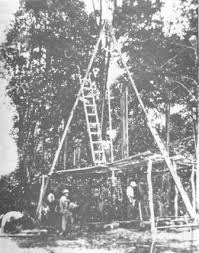
This argument is untrue, as Shell Oil discovered oil in Miri in 1910 and paid royalties to the Sarawak Government for 64 years. By the 1950s, oil exploration turned offshore. Two oil fields were discovered in 1962.
Before 1974, oil and gas companies were given the absolute right to oil fields. The oil companies made all decisions regarding exploration and extraction, including potential reserves. Sarawak was paid royalties, which at the time were 8%-11% of the oil sold.
On April 1, 1975, Petronas took over control of Sarawak oil. This was with the approval of Sarawak’s Prime Minister, Tun Abdul Rahman Yaacob, who suggested forming Petronas and a 5% royalty arrangement.
A 1976 constitutional amendment downgraded Sarawak’s status within the Federation of Malaysia. Instead of being one of three governing entities, Sarawak, Sabah, and the Federal Government, it became only one of 12 states united with the Federal Government.
This means Sabah and Sarawak should have been allocated 66% of the seats in Parliament, with Peninsular Malaysia allocated 33%.
This amendment went largely unchallenged at the time; it was passed with 130 votes in favour and only nine against in the federal Parliament. Most representatives from Sabah and Sarawak supported the bill largely because of political alignment with the ruling federal Barisan Nasional coalition government.
For decades, the ruling Barisan Nasional ruled Malaysia. Sarawak, under the iron rule of Abdul Taib bin Mahmud, was considered close to Kuala Lumpur, and the ruling party accepted the paltry 5% in oil revenues. This closeness prevented questioning how oil revenues were distributed, and it wasn’t until 2018, when Barisan Nasional’s influence waned, that Sarawak gained greater influence.
In 2014, Sarawak’s Legislative Assembly unanimously requested an increase from 5% to 20% under Adenan Satem, who succeeded Taib and served as Sarawak’s Prime Minister from 2014 to 2017.
In 2017, Sarawak set up Petros to manage the state government’s petroleum reserves. Tensions simmered until Petronas filed a lawsuit challenging the State government’s authority. A month later, Sarawak countersued, questioning the oil laws.
When Abang Zohari (Abang Jo) became Prime Minister in 2017, he imposed a 5% sales tax on petroleum products, timber, palm oil and other resources originating within the State. This amount is more than a 20% increase in the oil royalty.
When the tax increase was first proposed in 2019, Petronas refused to pay, arguing the tax was unconstitutional and invalid. All other oil companies, like Shell, complied and paid the tax. The dispute escalated into a massive civil lawsuit between the Sarawak Government and Petronas. The Kuching High Court ruled that it did indeed have the power to levy the tax. did indeed have the power to levy the tax.
In 2019, the newly elected Mahathir government in Kuala Lumpur, promised to give Sarawak 20% of oil royalties; a bill was tabled in Parliament to amend Article 1 (Section 2) of the Federal Constitution, but it failed to secure the required two-thirds majority. In 2020, the Mahathir-led coalition government collapsed after defections.
Sarawak was designated as returning to its former position of one third, with Sabah receiving one third while the Peninsula completed the other third. However, changing the seat allocation will require a constitutional amendment. Currently, Sabah (56 seats) and Sarawak (31 seats) hold 25% of Parliament’s seats, while Peninsular Malaysia holds the other 75%. The current demand is that Sabah and Sarawak together be allocated one third of the seats, with the Peninsula holding the other two thirds. If the seat allocation changes, Sarawak could force Petronas to increase the royalty the State receives.
Sarawak oil reserves are expected to run out in the next 10-15 years at the current production rate, according to the Department of Statistics Malaysia. This could change if new fields are discovered or improved extraction methods are developed. The LNG gas is expected to last for the next 26 years.
There is currently no change in the 5% allocation of oil royalties to Sarawak. The sales tax calculation has been manipulated, increasing oil revenues into Sarawak’s coffers.
The 2027 Court ruling will determine who controls the remaining Sarawak oil and gas. The ruling will have enormous implications for Petronas, Sarawak, Malaysia and the world energy market.
Compiled by Tom McLaughlin for BorneoHistory.net
Reference
Bhatta Gambhir. The Sarawak-Petronas Dispute over Oil Revenue I Malaysia. Lee Kuan Yew School of Public Policy (LKYSPP), National University of Singapore, 2026
Department of Statistics Malaysia. (2026, March 4). Mining of Petroleum and Natural Gas Statistics, Fourth Quarter 2025. Ministry of Economy, Malaysia.
National Energy Balance 2018 — Energy Commission of Malaysia, Table 6
The Edge Malaysia, 3 September 2026, reporting a written reply from the Ministry of Economy dated 8 August 2026.
Zahari, Wan M. Zulhafiz. The Distribution of Petroleum Resources in Malaysia: Unpacking Federalism. The Journal of World Energy Law & Business, Volume 13, Issue 5-6, December 2020, Pages 369–385, https://doi.org/10.1093/jwelb/jwaa040